
- Education
- Class 12 and above
- #marriage
- #monogamy
- #polygamy
- #women's dignity
- #equal rights
- #reason
- #vedic
- #student course
- #micro course
Vedic Marriage vs Islamist Excuses
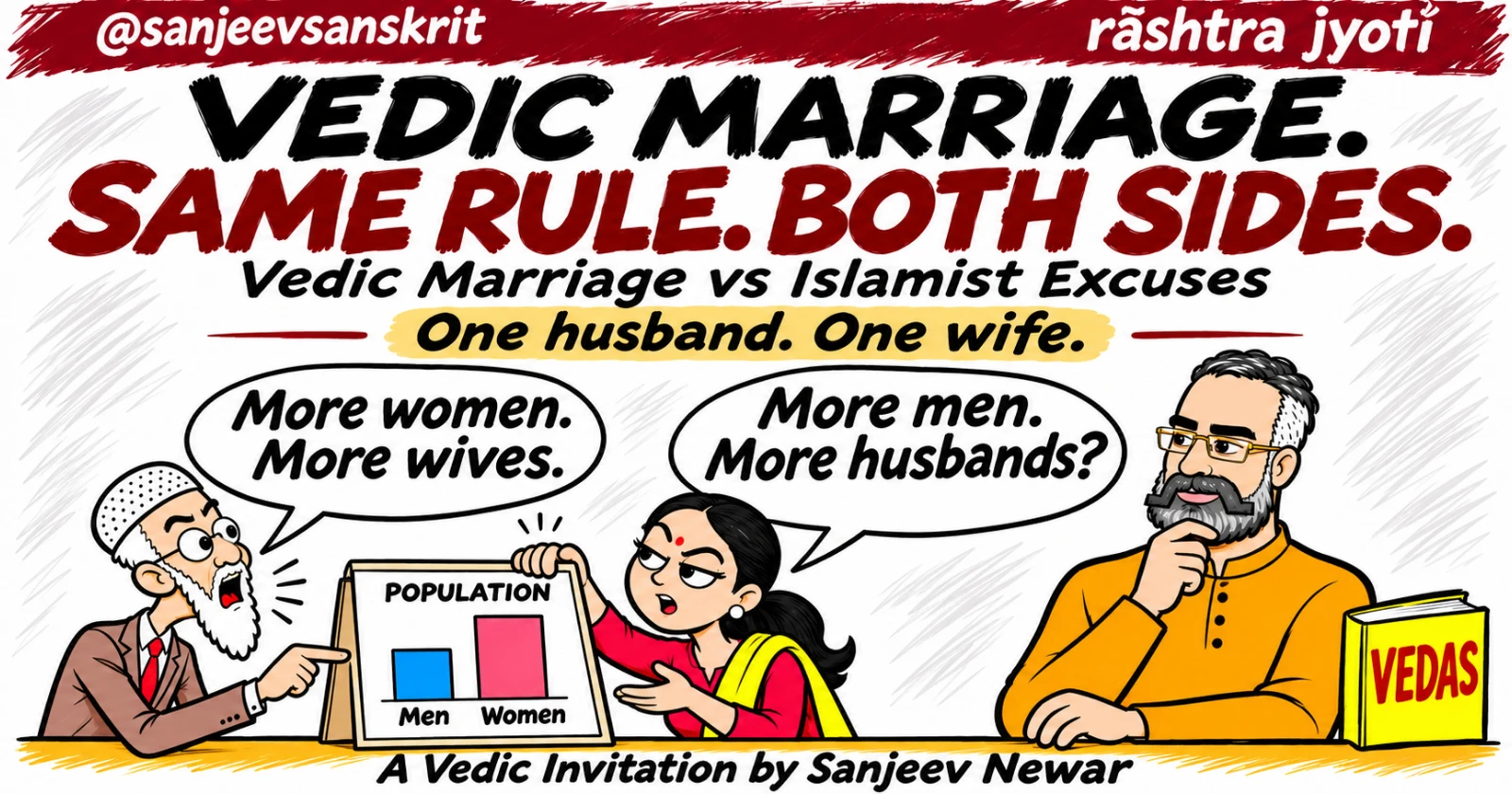
One Husband. One Wife. No Double Standards. A micro course on Sanjeev Newar's reply to Zakir Naik's claim that Hindu scripture lets a man marry as many wives as he wishes: the Vedic marriage mantras, Ram and Krishna, the census charts, the "public property" argument and four excuses, with cartoons and the Vedic answer.
About this course
One Husband. One Wife. No Double Standards.
A king had several wives. Zakir Naik treats that as a licence from Hindu scripture, then reaches for population figures and the supposed welfare of women. In Vedic Marriage vs Islamist Excuses, Sanjeev Newar answers: a woman’s dignity is not a headcount problem, and a king’s household is not a commandment. The Vedic ideal demands fidelity and self-control from both partners.
What you will examine
- What the scriptures say: Naik’s claim, the Vedic marriage mantras in the singular and the dual, the verses on co-wives, and the one verse offered as an escape route.
- Ram, Krishna and Hindu society: Dashrath and Ram, Krishna and the stories attached later, and a ruler’s practice against the ideal.
- Naik’s excuses: population arithmetic, the “public property” argument, and four reasons for allowing polygamy but not polyandry.
How it works
- Ten short lessons in the article’s own words, with the cited mantras and Naik’s own book linked.
- Cartoons from the article and questions in every lesson, with every answer explained.
- The Vedic answer, ten fresh cases, a ready reckoner, a guide to teaching one point, and what you must do.
Written for students in Class 12 and above.
Instructor
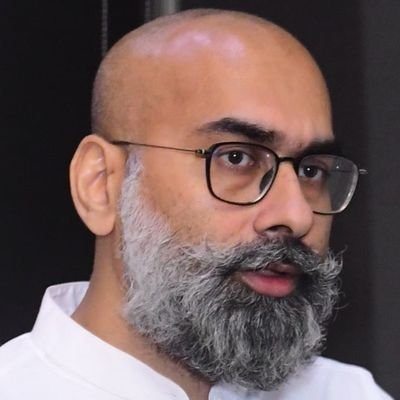
Sanjeev Newar
Founder & Acharya
Sanjeev Newar is an educationist, social reformer, and advocate for responsible entertainment, known for his groundbreaking work in promoting child-first policies and ethical content in media. His efforts have led to a nationwide movement for accountability in entertainment and have sparked a revolution in India's cultural landscape. As the founder of the Sewa Nyaya Utthan Foundation, Sanjeev has developed training methodologies that have received national acclaim for empowering marginalized communities and promoting social inclusion. With a background in energy sciences, risk management, and artificial intelligence, Sanjeev’s diverse expertise enhances his educational approach. His contributions to these fields, coupled with his work in Vedic studies, create a unique blend of modern knowledge and ancient wisdom that equips learners to excel across disciplines and life stages. Recognized for his impact in both academic and social arenas, Sanjeev continues to lead transformative initiatives that shape future leaders and thinkers.
Frequently asked questions
Whose arguments does the course examine?
Zakir Naik’s, as he gives them in his book Answers to Non-Muslims’ Common Questions about Islam and a 2009 lecture. His words are quoted with links to his own sources, and each is answered from the Vedas and from reason.
Are the cartoon conversations real quotes?
No. The preacher in the strips is a cartoon, and the dialogue is written to make the argument visible. Naik’s actual words appear in the lessons, with links.
How long does it take?
About 45 minutes for the lessons and ten minutes for the fresh cases. Your progress is saved, so you can stop and come back.
Is there a companion course?
Yes. This course is part of a series with Why I Am Not a Muslim, Why I Was a Muslim But Now a Hindu and Is God Testing Us?, each with its own micro course.
Ready to begin?
Enroll now